GLOOP
Firm under a punch
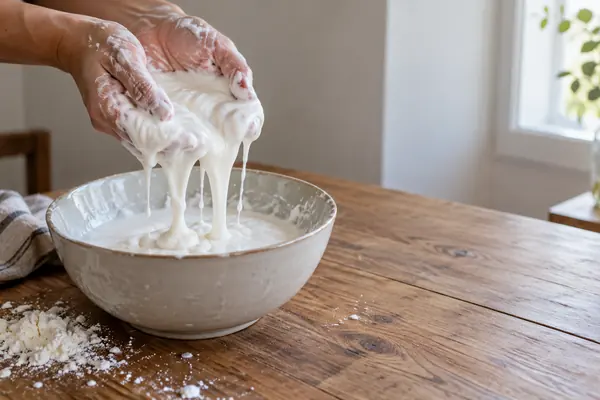
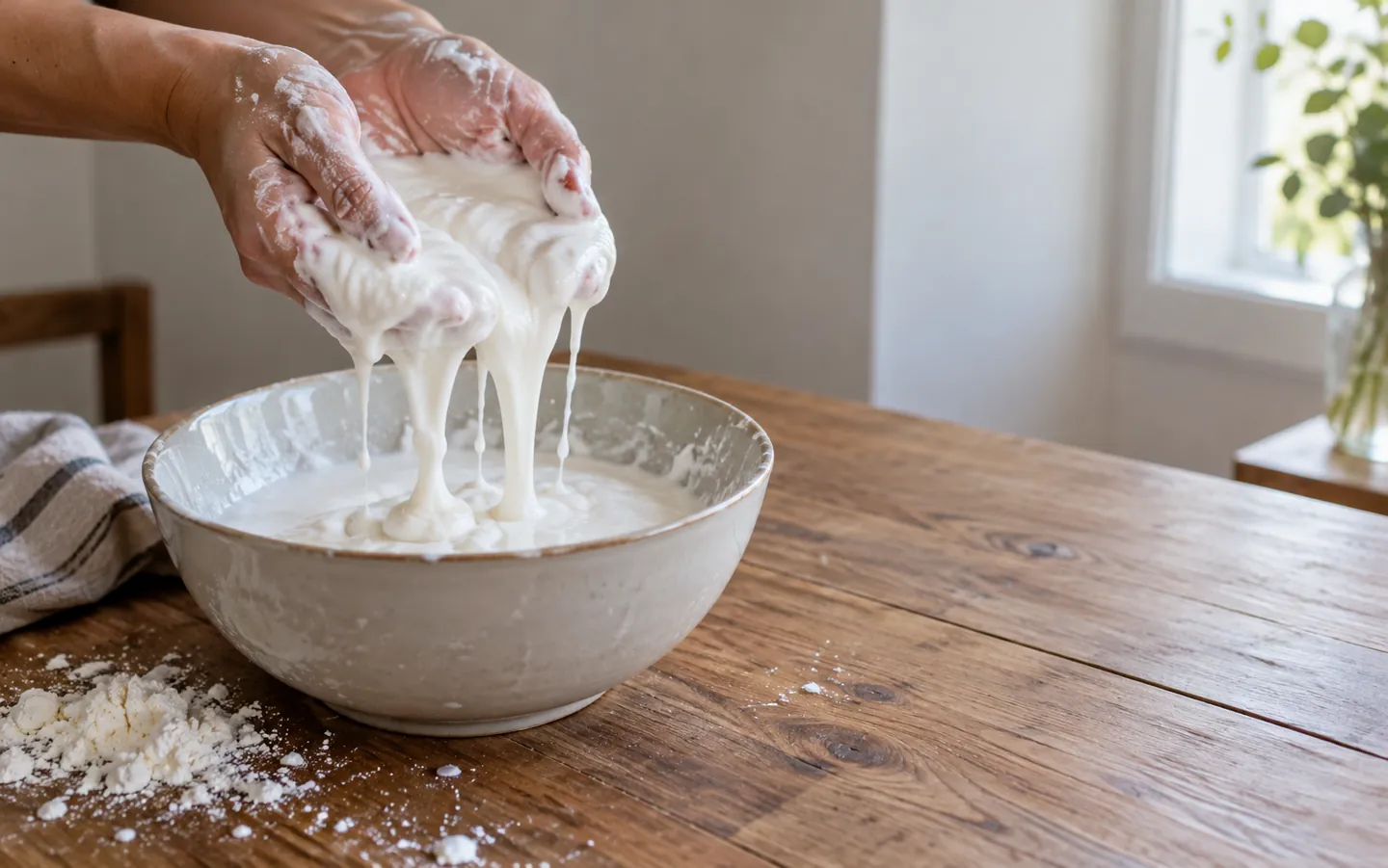
Hit cornflour and water and the grains jam into a solid-like column below the impact, like snow piling up in front of a snowplough.
How it works doodlegoo
WHAT THE SCIENCE SAYS
Some liquids change the rules when you push them.
SLOW IS FLOW fast is firm
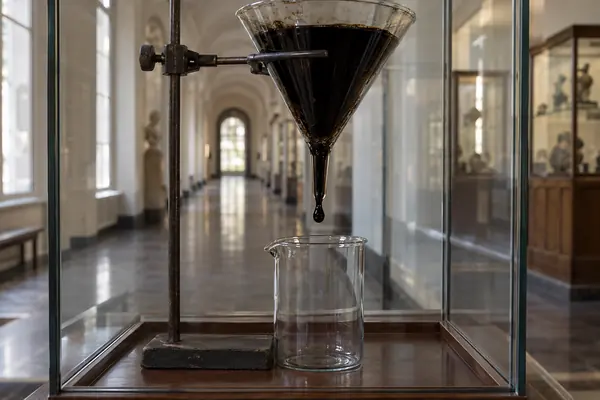
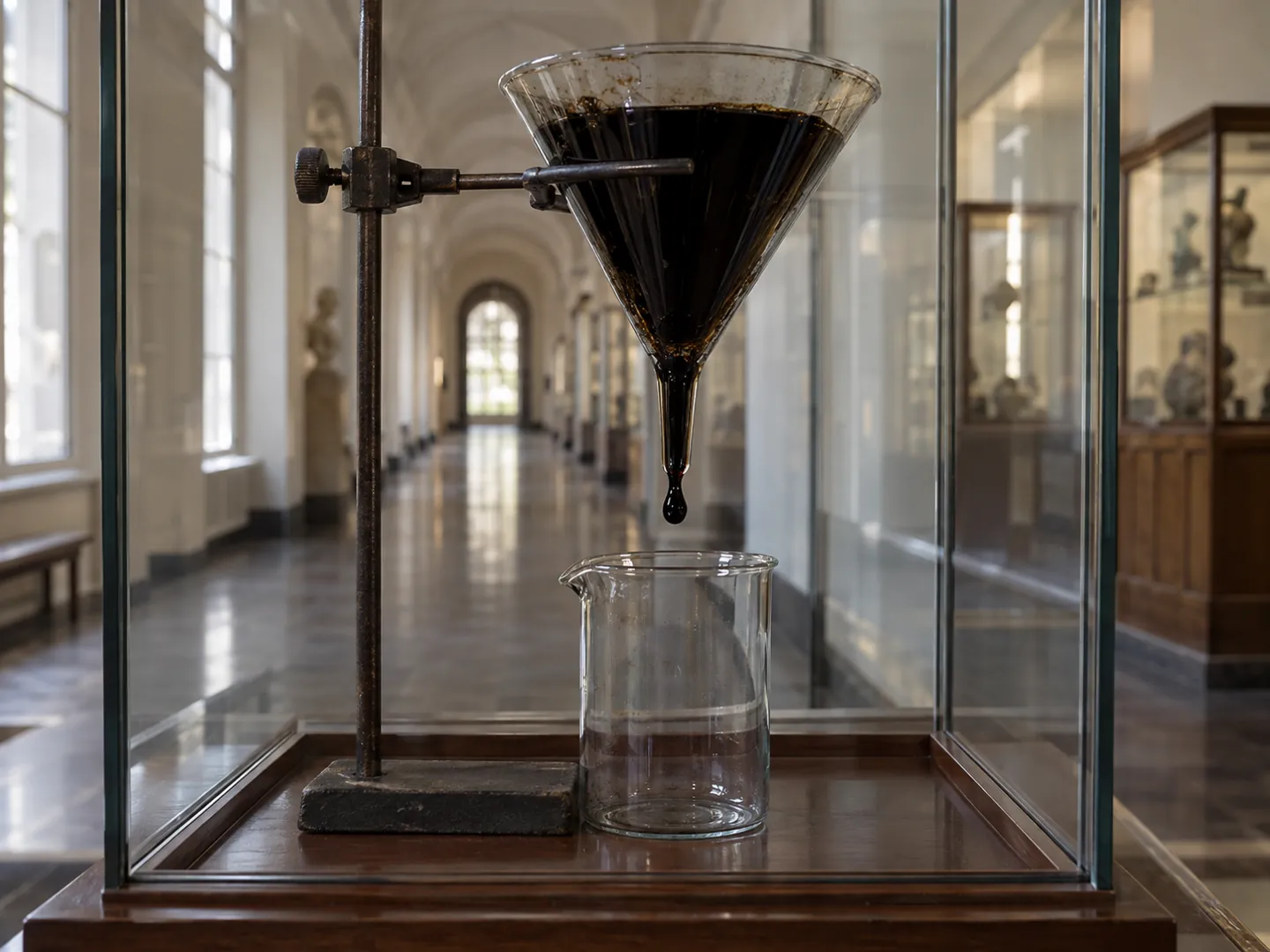
9 drops Drops that have fallen since the funnel was cut in 1930
Water flows the same however hard you stir it. Cornflour gloop, tomato sauce and shampoo do not. Scientists call them non-Newtonian fluids, and they are probably in your kitchen right now.
THE SHORT ANSWER
Three kinds of everyday goo.
Each one breaks the rules of water differently.
GLOOP
Hit cornflour and water and the grains jam into a solid-like column below the impact, like snow piling up in front of a snowplough.
How it worksSAUCE
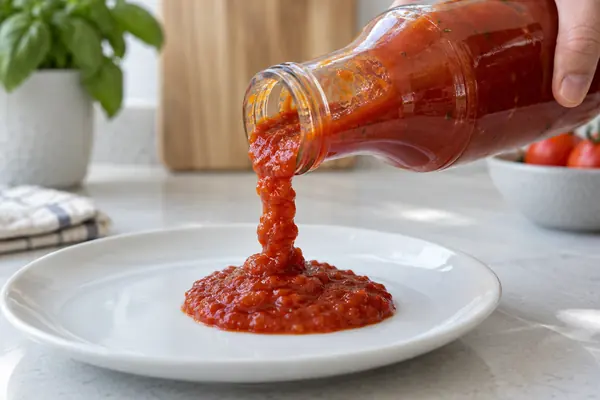
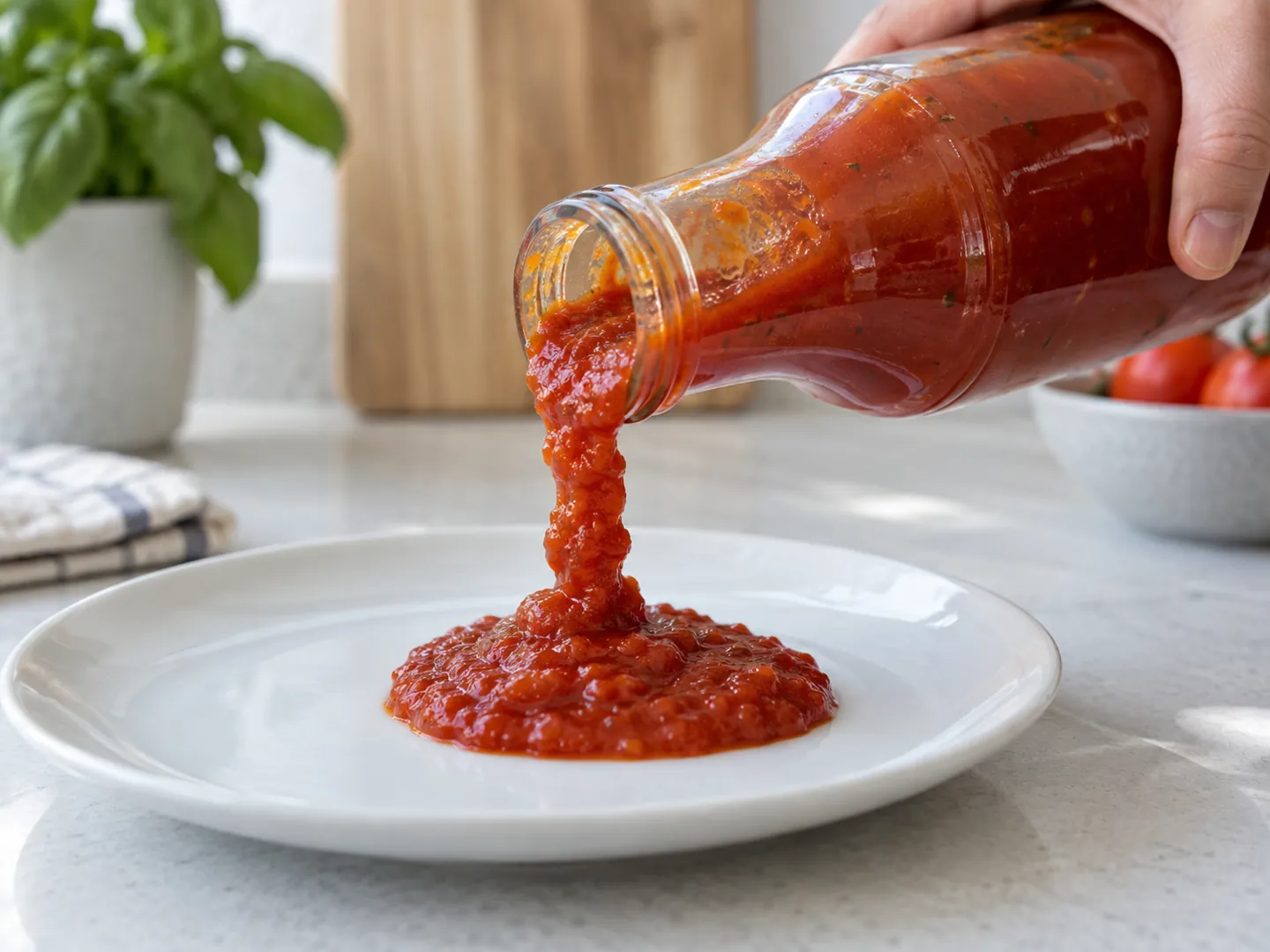
Tomato sauce is shear thinning: shaking stretches and lines up its tangled thickener chains, so they slide and the sauce flows.
Sort the gooPITCH
Pitch feels solid but is a fluid about 100 billion times more viscous than water. One funnel of it has dripped nine times since 1930.
See the numbersA QUICK GOO SORT
Pick a substance to see how it behaves under force. The bar is a rough guide to how much its thickness changes when you stir, shake or hit it.
Based on the Science Learning Hub (University of Waikato), Scientific American and University of Chicago research. Bar levels are a simple illustration, not measurements.
FOUR THINGS TO NOTICE
You can see each of these behaviours with things already in your cupboard. Each one is described in the sources below.
A quick stir of cornflour and water firms up and can trap the spoon; a slow stir flows freely.
Shaking or tapping a sauce bottle thins the sauce, and the effect lasts a little while, so you can pause before pouring.
Notice how shampoo flows more easily once you start rubbing it into a lather.
Stir a glass of water hard and gently. Its thickness does not change, which is what makes it Newtonian.
TWO NUMBERS WORTH KNOWING
One figure from the world's longest-running lab experiment,
one from a study of what happens when you hit gloop.
9 drops
Drops that have fallen since the funnel was cut in 1930
The pitch was poured in 1927 and left to settle for three years. The first drop took eight years and the most recent fell in April 2014. It holds the Guinness World Record for the longest-running laboratory experiment.
PITCH DROP · UNIVERSITY OF QUEENSLAND
100× greater
Stress from a rod driven in, compared with stirring
Driving a rod into cornflour and water easily produced stresses 100 times greater than the largest seen during shearing. That is why a runner can stay on top of a vat of it.
GLOOP IMPACT · UNIVERSITY OF CHICAGO
The University of Chicago team filmed the impacts with high-speed cameras at 10,000 frames per second, alongside force sensors, laser sheets and X-rays.
WHY GLOOP GOES SOLID
For years, scientists explained cornflour gloop with shear thickening alone, but the forces measured in stirring experiments were far too small to hold up a runner. In 2012, University of Chicago physicists dropped and drove rods into a large vat of it to find out what really happens.
They found that an impact pushes a shock-like front down through the mixture, jamming the grains ahead of it into a temporary solid column. When the push stops, the column melts back into liquid, and the rod slowly sinks. The work was published in Nature.
Questions
A fluid whose viscosity or flow changes under stress. Water is Newtonian: between 0 and 100 °C its viscosity stays constant however you stir it.
University of Chicago research found that each impact creates a solid-like column of jammed grains below the foot. Impacts produced stresses 100 times greater than the largest seen during stirring.
Tomato sauce is shear thinning. Shaking stretches its tangled thickener chains so they line up and slide past each other, lowering the viscosity. The chains take time to tangle again.
Yes. The University of Queensland describes pitch as the world's thickest known fluid, about 100 billion times more viscous than water, even though it feels solid at room temperature.
Only nine drops have fallen since the funnel was cut in 1930. The first took eight years, and the most recent fell in April 2014.
Updated
ABOUT THIS NAME
doodlegoo.com is part of the DoodleSale portfolio. It isn't in an auction right now, but you can ask about leasing it.